


Word Search World Hollywood
4.81.27K Reviews
App Specs
- Version
- 26.08
- Updated On
- License
- Free
- Downloads
- 10,000+
- Developer
- Hoyt Games
- Categories
- Word
- Platform
- Android
Screenshots
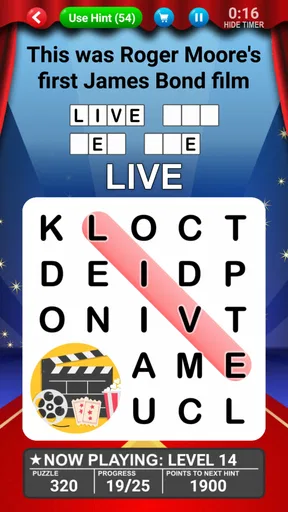
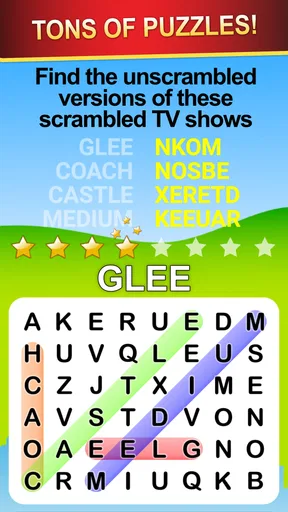
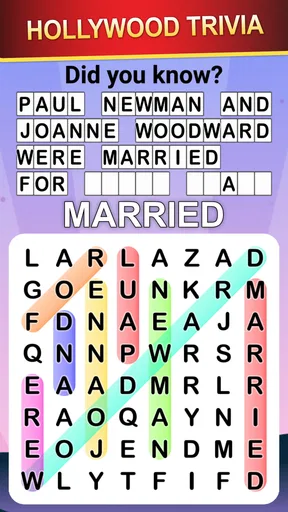
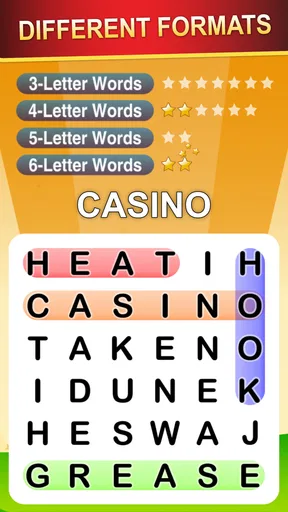


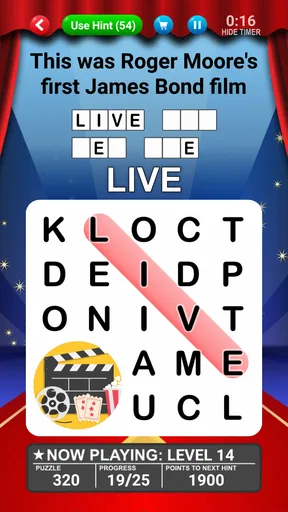
 Analysis by AppCompare
Word Search World Hollywood is the kind of word game I can open without preparing for a long session. It takes the familiar word-search format and gives it a movie-themed identity, turning a simple hunt through letters into something with a little more personality. After spending time with it, I found that its strongest quality is not complexity but mood: it creates a relaxed, entertainment-focused space where the puzzle stays easy to understand while the Hollywood setting gives each round a clearer sense of place.
That simplicity is important. This is not a game built around complicated rules, fast reflexes, or a large story. It is a casual word-search experience from Hoyt Games, connected to the work of Jumble puzzle author David L. Hoyt. The central appeal is being able to start quickly, scan a grid, and enjoy the small satisfaction of finding words one by one. For me, it works best as a short break, although players who enjoy methodically clearing puzzle collections may stay much longer.
A Hollywood mood built around familiar word searches
The first impression is friendly and accessible. The screen presents the puzzle as something inviting rather than intimidating, and the Hollywood theme gives the basic letter grid a recognizable flavor. I did not come to this game expecting a cinematic adventure, and that is the right expectation. The setting is there to frame the puzzle, not to replace it with characters, dialogue, or a branching plot.
That choice gives the game a coherent identity. Many word-search games can feel interchangeable because the main action is always the same: look across, down, or diagonally until a hidden word appears. Here, the entertainment theme helps separate the experience from a plain worksheet-style puzzle. It makes the game feel more like a themed pastime than a generic exercise in spotting letters.
The design also suits players who want immediate clarity. I never felt that I had to learn a complicated interface before playing. The basic interaction is familiar enough for someone who has used a printed word search, while the digital format removes the need for a pencil and makes it easy to continue from one puzzle to the next. That low barrier is one of the reasons I would recommend it to casual players who want something calm.
At the same time, the Hollywood identity will matter most to people who enjoy the subject. If you are looking for a completely abstract vocabulary challenge, the theme may feel like decoration rather than a meaningful part of the game. I think that is a fair trade-off: the setting adds charm and focus, but the underlying activity remains a conventional word search.
How the visual language supports the puzzle
The art direction works because it does not compete too aggressively with the letters. In a game like this, decoration has to remain secondary. If the background, icons, or themed presentation became too busy, they would make scanning the grid tiring. The better approach is to let the Hollywood atmosphere appear around the puzzle while keeping the playable area readable.
Worth Reading Before You Choose

Flipboard Shows What News Apps Must Do Beyond the Feed

Switching to Android Auto Means Rethinking Your Driving Routine

Google Calendar Makes a Crowded Week Easier to Manage

Ludo King Makes the Most of the Minutes Between Plans

Baby Panda World Brings Quick Play to Modern Phones, but Its Game Library Feels Busy

ESPN’s Live Game View Makes Following Close Games Easier
I found that separation useful during longer searches. My attention naturally stays on the letter arrangement, but the surrounding presentation prevents the experience from feeling like a bare block of text. That balance is especially valuable on a phone, where a crowded layout can make a word-search grid uncomfortable to inspect.
The theme also changes how I interpret the pacing. A Hollywood setting suggests energy, spectacle, and movement, yet the game does not force that energy into the controls. Instead, it uses the idea of entertainment as a light wrapper around a quiet activity. The result is a pleasant contrast: the subject feels lively, while the actual play remains patient.
One practical tip is to treat the visual theme as a pacing cue rather than a promise of action. I get more from the game when I stop expecting a story or a dramatic challenge and concentrate on the small rhythm of scanning, recognizing, and marking words. That mindset makes the presentation feel intentional instead of limited.
The right role for sound and rhythm
Word-search games depend more on visual concentration than on sound, so audio has to support the mood without becoming the main attraction. In my experience, the most successful rhythm here comes from the player’s own actions: searching in one direction, spotting a possible word, tracing it, and moving on to the next target. It is a gentle loop, and the Hollywood framing gives that loop a little more character.
This is not a game I would choose when I want a dramatic soundtrack or a strong audio identity. Its appeal is quieter. The atmosphere works best when the presentation lets me focus on the puzzle and enjoy the feeling of gradual progress. That makes it suitable for a waiting room, a relaxed evening, or a short pause between more demanding tasks.
There is also a useful distinction between pace and pressure. The game can feel active because I am constantly scanning the grid, but it does not need to rush me to remain engaging. I prefer that approach for this genre. A timer or aggressive challenge structure might create excitement, but it could also undermine the easygoing Hollywood mood that makes this particular version approachable.
For an everyday example, I can imagine opening it while waiting for an appointment. I might complete part of a puzzle, put the phone away, and return later without needing to remember a complicated objective. That stop-and-start convenience is more important to me than a dramatic sense of progression. It makes the game fit naturally into small gaps in the day.
Where the mechanics fit—and where they do not
The core mechanics are straightforward, which is both the game’s strength and its main limitation. Players who already enjoy word searches will understand the appeal immediately. The challenge comes from visual attention and vocabulary recognition, not from learning a complex control system. I like that the game respects the basic pleasure of the format instead of burying it beneath unnecessary features.
That simplicity also makes the experience approachable for a wide range of casual players. Someone who wants a gentle mental workout can play without committing to a large campaign or mastering a set of special moves. The Teen content rating gives the game a clear audience boundary, but the basic word-search concept itself remains easy to pick up for players who are comfortable with themed vocabulary puzzles.
The trade-off is that experienced puzzle fans may want more variety than the central format provides. If your favorite word games introduce unusual rules, layered objectives, or increasingly complex systems, this may feel restrained. I would choose it over a more elaborate alternative when I want calm concentration, but I would choose a richer puzzle game when I want surprise or strategic depth.
A useful way to play is to change your scanning method instead of relying on random searching. I usually begin with the longest-looking words or with unusual letter combinations, then check the edges and corners before sweeping through the center. This creates a repeatable workflow and reduces the feeling of staring at the grid without a plan. It is a small habit, but it makes the game feel more satisfying and less dependent on luck.
Another tip is to use the word list as a vocabulary map, not just a checklist. When several targets share a common ending or beginning, I look for those letter patterns first. This is particularly helpful when the puzzle contains several words with similar visual shapes. The game does not need complicated mechanics to reward careful observation; the reward comes from finding a smarter search route.
Progress, commitment, and spending
The game is free to play, which makes it easy to try before deciding whether its style suits you. It includes in-app purchases ranging from $1.99 to $49.99 per item, so I would advise checking the purchase flow carefully and deciding in advance whether you want to spend anything. The free entry point is useful, but the presence of optional purchases means the overall experience may not feel identical for every player.
I also appreciate that the game does not require me to treat every session as a major commitment. Its current version is 26.08, and it runs on devices using Android 6.0 or later. That compatibility makes it relevant to people who keep an older Android phone for simple games, although the exact feel will still depend on the device’s screen size and responsiveness.
The game has been available since April 7, 2022, and its audience has grown to over 10 thousand installs. Its average rating is 4.8 from around 2.5 thousand ratings, with roughly 1.3 thousand written reviews. Those figures suggest that the straightforward format and themed presentation have connected with many players, though I would still judge it by your own taste: a strong reception cannot turn a traditional word search into a deep strategy game.
One point worth considering is the difference between free access and long-term value. If you enjoy short word-search sessions and like the Hollywood presentation, the free version may be enough to make the game worthwhile. If you quickly become bored with repeated grid searching, purchases will not solve that basic issue. The central question is not whether the game has enough spectacle, but whether you genuinely enjoy its core activity.
Who should play it and who should skip it
I would recommend Word Search World Hollywood to players who want an uncomplicated word game with a recognizable entertainment theme. It is a good fit for people who enjoy visual scanning, prefer relaxed pacing, and like games that can be played in brief sessions. It may also suit families looking for a simple shared activity, provided the Teen rating fits the intended player and the device owner is comfortable managing any in-app purchases.
I would be less likely to recommend it to someone seeking a narrative Hollywood game, a competitive timed experience, or a vocabulary trainer with detailed explanations. The theme creates atmosphere, but it does not transform the word search into a story-driven production. Likewise, players who need constant mechanical novelty may find the basic loop too familiar after the initial appeal fades.
Compared with a traditional paper word search, the digital version is more convenient and easier to carry, while the Hollywood framing adds a stronger sense of occasion. Compared with a general mobile word-game collection, it is more focused and less varied. Compared with a crossword or an anagram game, it asks for visual pattern recognition more than clue interpretation. I would pick it when I want to relax my mind without switching it off completely.
My final view of the atmosphere
What stays with me is the game’s consistency. The art direction, entertainment setting, and unhurried rhythm all point toward the same kind of session: open the game, settle into the grid, and let the search take over for a while. The mechanics remain simple, but they are simple in a way that supports the intended mood rather than fighting it.
The best reason to play is the combination of familiar word-search comfort and a more distinctive Hollywood wrapper. I would not describe it as a revolutionary word game, and I would not choose it when I want demanding puzzles or a substantial story. But as a free, approachable pastime from Hoyt Games, it has a clear purpose and carries it out well.
My recommendation is therefore specific: try it if you enjoy themed word searches and want something peaceful for short breaks. Before spending money, play enough to decide whether the recurring search pattern holds your attention. If it does, the atmosphere gives the familiar format extra charm. If it does not, a crossword, anagram game, or more varied puzzle title will probably offer better long-term value.
For me, Word Search World Hollywood succeeds because it understands that a small game does not need complicated systems to create a memorable tone. Its Hollywood language adds color, its pacing leaves room to breathe, and its mechanics stay readable from the first puzzle. That makes it an easy recommendation for the right player, as long as you approach it for its calm, focused word-search experience rather than expecting a full movie-themed adventure.
Pros
- Large collection of Hollywood-themed word-search puzzles
- Relaxing gameplay suitable for short or casual sessions
- Simple controls make it easy for beginners to start
- Progression system encourages players to complete more puzzles
- Works well for fans of movies
- actors
- and entertainment trivia
Cons
- Some puzzles may feel repetitive after extended play
- Difficulty can vary noticeably between individual levels
- Hints may be limited unless earned or purchased
- Ads can interrupt gameplay
- especially in the free version
- Requires strong English vocabulary for the best experience
FAQs for Word Search World Hollywood
What is Word Search World Hollywood?
Word Search World Hollywood is a themed word puzzle game that takes players through Hollywood-inspired locations and challenges. The main objective is to find hidden words in a grid of letters, usually by swiping across connected letters in different directions. Its entertainment-focused presentation, progressive levels, and celebrity or movie-related atmosphere make it suitable for casual players who enjoy relaxing vocabulary games with a show-business theme.
How do you play Word Search World Hollywood?
Each puzzle presents a collection of hidden words inside a letter grid. You need to scan the board and drag your finger across letters to form the requested words, which may appear horizontally, vertically, diagonally, or in reverse depending on the level. Completing the listed words generally unlocks the next challenge, while the changing themes and layouts help keep the basic search mechanic from feeling repetitive.
Is Word Search World Hollywood free to download and play?
The game can generally be downloaded without an upfront purchase, allowing players to try its core word-search levels at no initial cost. However, free mobile games may include advertising, optional purchases, or other limitations connected to progression and extra resources. Before installing, it is worth checking the current Google Play or App Store listing for the exact pricing model, available in-app purchases, and any platform-specific differences.
Does Word Search World Hollywood require an internet connection?
Some parts of Word Search World Hollywood may work offline after the necessary game content has been installed, which is useful when playing during travel or in areas with weak reception. Nevertheless, an internet connection can be required for advertisements, updates, analytics, cloud-related features, or certain downloads. Availability may also vary by device version, so testing a level in airplane mode is the best way to confirm offline access.
Is Word Search World Hollywood suitable for children and casual players?
The simple swipe-based controls and familiar word-search format make Word Search World Hollywood accessible to casual players, including people who prefer short, low-pressure gaming sessions. Parents should still review the store age rating, advertising details, privacy information, and possible purchase options before allowing children to play. Difficulty can increase over time, so younger users may occasionally need help with longer words or more crowded letter grids.


